Petroleum Africa
Find us on: 


Monday, August 31, 2015
Chevron achieved a technological feat to complete the drilling of a well intersection conduit beneath the Congo River submarine canyon, as part of the Congo River Canyon Crossing pipeline project. The Congo River submarine canyon is one of the world’s largest underwater canyons.
For Chevron to create the intersection, two wellbores were drilled simultaneously from shallow water platforms located on each side of the canyon. One of the platforms is located in the DRC and the other in Angola. The wellbores transitioned from vertical to horizontal, and then intersected almost midway beneath the canyon, approximately 2,000 ft beneath the seabed, where the water depth is one-half mile.
The pipeline will transport natural gas from Angola’s offshore Blocks 0 and 14 to the ALNG plant. When completed, the pipeline will be approximately 87 miles in length and initially transport up to 250 Mmcf/d of natural gas.
“The Congo River well intersection is a major engineering feat,” said Ali Moshiri, president of Chevron Africa and Latin America Exploration and Production Company. “And with the drilling platforms and subsea structures having been fabricated in-country, this project is another prime example of Chevron’s commitment to helping fuel Angola’s economic development.”
The Congo River crossing is Chevron’s largest-ever well intersection and it is the most technically challenging aspect of the pipeline project. The well intersection provided the most secure method of crossing the canyon and connecting to the pipeline at the platforms located on each side of the canyon.
“This was the most unique well intersection project of its kind ever undertaken by Chevron—and the very first in the industry performed offshore,” said Ben Leonard, project drilling manager for Chevron’s Southern Africa strategic business unit. “Other intersection projects have involved drilling under highways or riverbeds, but this one is more than 10 times the length of a routine crossing.”
Chevron employed several innovative technologies and processes during the drilling; for example, an active magnet ranging technology was used to direct the drilling assembly so that the wellbores merged precisely on a target roughly the size of a basketball. This involved a magnetic sensor in the drill string on one side and a powerful magnet, located behind the drill bit, on the other side.
An additional challenge for the project team was to install the two offshore platforms in an area close to the mouth of the Congo River where there are strong currents the company said.
 " alt="First LNG Realized at the Greater Tortue Ahmeyim Project">
 " alt="United Energy Acquires Western Desert Producer APEX">
 " alt="Baker Hughes Announces Major Gas Technology Orders for Venture Global LNG">
 " alt="ReconAfrica: Naingopo Results Demonstrate a Working Petroleum System">
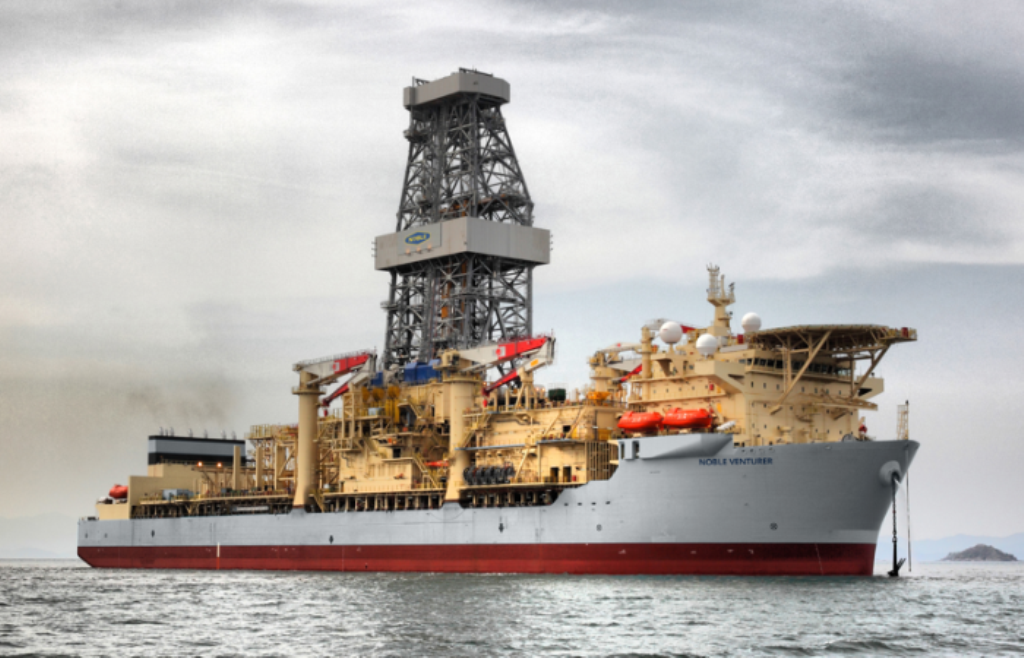 " alt="Tullow Highlights 2025 Operational Plans in Ghana">
 " alt="TotalEnergies to Supply 1.5 TWh to STMicroelectronics in France Over 15 years">
 " alt="Rockhopper Reaches Final Settlement with United on Egypt’s Abu Sennan Concession">
 " alt="Oil & Gas Crucial for African Growth: AEC Calls for Industry Support to Defend African Market">