Petroleum Africa
Find us on: 


Monday, April 29, 2013
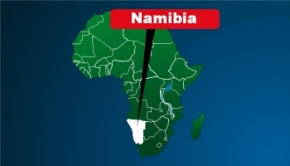
Global Petroleum reported on Namibia where it holds an 85% interest in PEL 29 covering Blocks 1910B and 2010A. The license, issued in December 2010, covers 11,730 sq km and is located in water depths ranging from 1,300 meters to 3,000 meters.
Global fulfilled its work obligations regarding the license, which involved reinterpretation of 2,000 km of purchased seismic and commissioning of a high resolution 2D seismic acquisition program of some 2,000 km over the acreage. The new data confirmed the presence of two large structures and other potential leads.
The company’s exploration manager, Chris Lewis, completed a review of all 2D data purchased or acquired by the company on the two blocks covered by the license and his findings confirmed that the structural prospects identified are both anticipated to contain a thick, Albian to Aptian age, carbonate reservoir within a fault controlled trap, sealed by overlying deep marine shales.
Within, or close to the blocks there are oil slicks on the ocean surface, hydrocarbons recovered from seabed cores, evidence of hydrocarbons on 2D seismic, and oil and gas shows in a nearby well which all provide positive evidence for the generation and migration of hydrocarbons. Therefore there is every indication of a working petroleum system in this part of the WalvisBasin. Current internal estimates of mean prospective resources for each prospect are greater than one billion barrels of recoverable oil.
Landward of the structural prospects, sedimentary features are clearly visible on the seismic data showing the potential for the development of sandstone reservoirs within stratigraphic traps. There is a large late-Cretaceous delta evident from seismic, which will provide the source of significant volumes of sand, confirmed by the sandstones intersected in nearby wells and in the recent Tapir South well. The company said that several stratigraphic leads have been mapped, along two independent fairways, with the potential to contain significant resources.
Given the amount of equity the company has in the acreage Global’s board decided to seek a partner for the next phases of exploration activity on its acreage, commencing with 3D seismic. Following the review full review of all 2D seismic information, a data room was established in London and prospective farm in partners are being invited to review the complete data sets.
In addition the company’s subsidiary, Jupiter Petroleum, saw the reprocessing of historic 2D data acquired by the operator, Wessex Exploration, completed on acreage in Juan de Nova est Permit. The permit is situated to the east of the small island of Juan de Nova in the Mozambique Channel, immediately to the west of Madagascar.
The company reported that it has been in active dialogue with Wessex regarding the next stages of operations on the block. Phase I of the permit expires in December 2013. Global has indicated to Wessex that it wishes to progress a work program to maintain its 30% interest in the project.
Jupiter holds a 30% interest in the Juan de Nova Est Permit, with Wessex as the operator holding the remaining 70%.
 " alt="First LNG Realized at the Greater Tortue Ahmeyim Project">
 " alt="United Energy Acquires Western Desert Producer APEX">
 " alt="Baker Hughes Announces Major Gas Technology Orders for Venture Global LNG">
 " alt="ReconAfrica: Naingopo Results Demonstrate a Working Petroleum System">
 " alt="Tullow Highlights 2025 Operational Plans in Ghana">
 " alt="TotalEnergies to Supply 1.5 TWh to STMicroelectronics in France Over 15 years">
 " alt="Rockhopper Reaches Final Settlement with United on Egypt’s Abu Sennan Concession">
 " alt="Oil & Gas Crucial for African Growth: AEC Calls for Industry Support to Defend African Market">