Petroleum Africa
Find us on: 


Friday, October 3, 2014
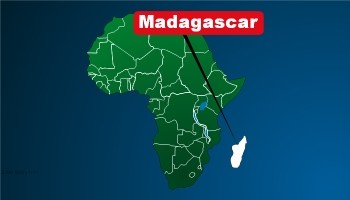
International Human Resources Development Corp. (IHRDC) has reached agreement with ExxonMobil Exploration & Production Madagascar Majunga Ltd. (EMEPMML) and Madagascar’s University of Antananarivo to make its extensive library of petroleum e-Learning courses available to select students in a new program managed by the university’s École Supèrieure Polytechnique and IHRDC.
The program will be designed to build a base of student knowledge about the petroleum sector and the complex processes involved in oil and gas production. It will be derived from IHRDC’s award-winning IPIMS catalogue of online training courses designed to build competencies for industry professionals in upstream petroleum technology worldwide.
Under the agreement, EMEPMML will provide a year of sponsorship for the program in which 30 students and professors chosen from the geology and petroleum engineering departments of the University of Antananarivo’s Polytechnique School will be given access to multiple interactive courses for in-depth knowledge about specific areas of exploration and production technology. In addition, EMEPMML staff will make regular presentations to students at the school during the year on subjects concerning the hydrocarbons sector.
“We are delighted to be partnering with the University of Antananarivo in offering our e-Learning library to students interested in learning about petroleum exploration and production technology,” said Tim Donohue, VP of e-Learning & Knowledge Solutions for IHRDC. “With this agreement, ExxonMobil Exploration and Production Madagascar has made it possible for us to reach an expanding community of promising students with a stake in the future of East-African energy development.”
The IHRDC – University of Antananarivo initiative is one of a number of programs underwritten by ExxonMobil companies as part of their ongoing commitment to invest in education programs focused on inspiring students around the world to pursue careers in science, technology, engineering and mathematics, including those that focus on teacher development and training.
“We hope that this program can serve as a model for additional petroleum training partnerships in other parts of Africa,” adds Donohue. “Disseminating knowledge in this way makes sense for governments, universities and their students, who represent the future of the continent’s petroleum industry.”
 " alt="First LNG Realized at the Greater Tortue Ahmeyim Project">
 " alt="United Energy Acquires Western Desert Producer APEX">
 " alt="Baker Hughes Announces Major Gas Technology Orders for Venture Global LNG">
 " alt="ReconAfrica: Naingopo Results Demonstrate a Working Petroleum System">
 " alt="Tullow Highlights 2025 Operational Plans in Ghana">
 " alt="TotalEnergies to Supply 1.5 TWh to STMicroelectronics in France Over 15 years">
 " alt="Rockhopper Reaches Final Settlement with United on Egypt’s Abu Sennan Concession">
 " alt="Oil & Gas Crucial for African Growth: AEC Calls for Industry Support to Defend African Market">