Petroleum Africa
Find us on: 


Friday, June 24, 2016
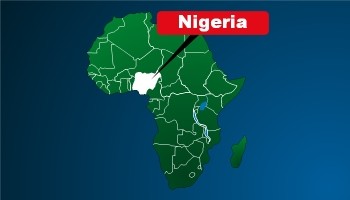
It’s that time of the presidential term once again in Nigeria, when thoughts turn to reviving the hope that Nigeria’s refining capacity can one day meet its domestic needs. The federal government has introduced new strategies aimed at putting the West African producer on the road to self-sufficiency in regards to the refining of petroleum products.
Under the government’s plan Nigeria will increase its refining capacity to about 2.050 million bpd. To get this done the Department of Petroleum Resources (DPR) has issued licenses to 25 investors to build modular and conventional refineries with capacity to process about 1.429 million bpd.
The government has also seen investors submitting bids to build new refineries alongside its three existing refineries in Kaduna, Warri, and Port Harcourt. If the construction of these refineries actually materialize, they are expected to increase the nation’s refining capacity from 445,000 bpd to 650,000 bpd.
There has been talk and tenders over the years to boost Nigeria’s refining capacity, which is thoroughly strained due to the disrepair of its established facilities. There has been talk on more than one occasion of repairing these refineries and funds have even been allocated to do just that; however, what those funds were used for is unclear as the existing refineries never saw more than what could be deemed as basic maintenance that just allowed them to hobble along far below their respective nameplate capacities.
DPR posted a list of licensees on its website, showing about 25 companies interested in building refineries. These refineries would have capacities ranging from 5,000 bpd to 500,000bpd.
Some of the companies that have been issued licenses include Resource Petroleum & Petrochemicals International Incorporated, 100,000 bpd; Hi Rev oil Limited, 50,000 bpd; Aiteo Energy Resources Limited, 100,000 bpd; Epic Refinery and Petrochemical Industries Limited, 107,000 bpd; Petrolex Oil and Gas Limited, 107,000 bpd; and Eko Petrochem and Refining Company Limited with capacity to produce 20,000 bpd. In addition to these above Capital Oil and Gas Limited, 100,000 bpd; Master Energy Oil and Gas Limited, 30,000 bpd; Kainji Resources Limited, 24,000 bpd; Cross Country Oil and Gas Limited, 20,000 bpd and Waltersmith Refining and Petrochemical Company with capacity to produce 5,000 bpd.
According to one industry expert who spoke to Petroleum Africa under the condition of anonymity, “You would be hard pressed to find more than a few of these firms that exist beyond the paper it took to incorporate them,” however the DPR says the licensed refiners are all at different stages of their projects.
It should be noted that the government of Nigeria has been granting licenses for the establishment of private refineries since 2002; to date none have taken off. Why have none of them gotten off the ground in 14 years? Well the answer to that depends on who you ask. The companies blame bureaucracy of the federal government and the DPR, while the government says that a failure to meet the technical aspects and generate the necessary funding by the companies is to blame.
There is one solid bright spot in Nigeria’s refining future, the Dangote Refinery. The refinery is being built by Africa’s richest man, Alhaji Aliko Dangote and unlike the firm’s mentioned previously, no one can doubt that Dangote has the funds or can get the funds to see this project through. Though Dangote Refinery initially applied for a license to build a 500,000 bpd capacity facility, it has now tagged it with an expected capacity at 650,000 bpd to meet local and international demand. The refinery site will also have a petrochemical and fertilizer plant.
In May, during an interview with Daily Trust, Mansur Ahmed, Dangote’s director, stakeholder relations and corporate communications head gave an update on the progress of the construction of the refinery to date. Near the end of May the engineering design was almost completed and work had begun on preparing the site for construction. The refinery and petrochemical complex site covers about 250, 000 hectares in the Lekki Free Zone. The company has already started building the of the fertilizer plant and according to Ahmed this could be complete by the end of 2017.
“The refinery will take longer because it is a much bigger complex. The capacity of the refinery is 650,000 barrels per day. It is about one and a half times the capacity of all the Nigerian refineries that exist today,” Ahmed said.
Also in May Dangote revealed that Honeywell unit, UOP LLC’s process technology, catalysts and proprietary equipment will form the basis of its refinery. In addition to processing crude oil to produce high-quality gasoline, diesel and jet fuel that meet Euro V specifications for reduced emissions, the new facility will produce world-scale quantities of polypropylene.
UOP technologies at the Dangote Refinery will include the company’s Resid Fluid Catalytic Cracking process to produce transportation fuels from crude oil. It will also supply propylene, which will be used as a feedstock for polypropylene; the CCR Platforming™ process to produce high-octane gasoline blending components; the Unicracking™ process to produce diesel; the Penex™ process to produce high-octane gasoline; and the crude distillation unit (CDU) design, which will be provided by UOP’s alliance partner, Process Consulting Services. In addition to technology licensing and design services, the UOP organization is working with Dangote to provide catalysts, adsorbents, and proprietary equipment for the project.
 " alt="First LNG Realized at the Greater Tortue Ahmeyim Project">
 " alt="United Energy Acquires Western Desert Producer APEX">
 " alt="Baker Hughes Announces Major Gas Technology Orders for Venture Global LNG">
 " alt="ReconAfrica: Naingopo Results Demonstrate a Working Petroleum System">
 " alt="Tullow Highlights 2025 Operational Plans in Ghana">
 " alt="TotalEnergies to Supply 1.5 TWh to STMicroelectronics in France Over 15 years">
 " alt="Rockhopper Reaches Final Settlement with United on Egypt’s Abu Sennan Concession">
 " alt="Oil & Gas Crucial for African Growth: AEC Calls for Industry Support to Defend African Market">