Petroleum Africa
Find us on: 


Monday, May 12, 2014
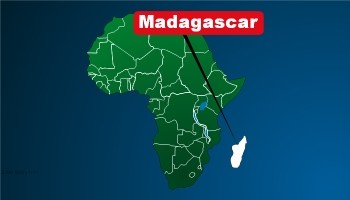
Madagascar Oil has declared to its partner on Block 3104, OMNIS, Madagascar’s state-run oil firm, that it has determined the Tsimiroro discovery a commercial discovery under the terms of the PSC between the two. Simultaneously the company submitted an appraisal report to OMNIS, as required under the PSC. These submissions trigger a period of up to 180 days for submission by Madagascar Oil S.A. of a Full Field Development Plan (FFDP) to OMNIS, for its subsequent approval.
The Tsimiroro oil field is a giant heavy oil field in western Madagascar with independently audited contingent oil in place of 1.7 billion barrels (P50) Stock Tank Oil Originally In Place (STOOIP). The group plans to continue to operate the SFP throughout 2014 and into 2015 to provide additional data on how the Tsimiroro Amboloando reservoir responds to both Cyclic Steam Stimulation (CSS) and steam-flood thermal recovery methods to inform the future development plans for the license. The group proposes to commence development of the well-defined high quality reservoir areas close to the existing SFP area, while also addressing the geological uncertainties in other areas of the Tsimiroro Main Field. Appraisal programs including drilling, seismic acquisition and the newly tested land magnetometer techniques are being prepared for implementation in 2014 and 2015.
In accordance with the license terms, following the submission of the declaration of a Commercial Discovery, OMNIS will apply for a Titre Minier d’Exploitation, which would be effected by a decree. The group will work with OMNIS and other Madagascar government bodies over the coming months on the structure and content of the FFDP, the approval of which would lead to the decree converting the PSC from the current exploration phase to an initial 25 year exploitation period.
The Appraisal Report submitted with the Declaration of Commerciality is written in compliance with the PSC terms and is primarily a geological description of the Tsimiroro Main Field Amboloando reservoir and other discovered resources and structures such as the Tsimiroro South Accumulation in the License. The geological description includes the incorporation of the 2012 acquired Airborne Gravity Gradiometry survey which has allowed a new compartment model of the Tsimiroro Main Field to be developed. Field compartments have been evaluated according to existing well information and graded according to their suitability for thermal recovery applications. An initial risked probabilistic assessment of oil in place is being applied on a compartmental basis to allow identification of resources that thermal recovery techniques can be applied to. This will help to highlight the priority reservoir compartments for appraisal drilling in 2015 to confirm their potential for development. It is envisaged that a new Competent Person’s Report will be commissioned when the results of this appraisal work have been evaluated.
The Tsimiroro full field development concept involves a phased areal development of the Amboloando reservoir with the initial phase targeting the fault compartment containing the existing SFP area. This initial phase anticipates trucking the Tsimiroro oil into the current local Madagascar Heavy Fuel Oil market of around 2,000 barrels per day. Thereafter, higher production volumes would become available for sales by marine exports to international destinations in the region. The development of the field will be characterised by an incremental approach to existing facilities with upgrades of the SFP Plant being implemented to accommodate increased volumes. New wells will be drilled to a similar pattern to the existing SFP where the terrain allows.
Initial development activity will be on a step-by-step basis and will involve infrastructure improvements, including road upgrades. Civil engineers, retained by Madagascar Oil S.A., have prepared a detailed work plan for upgrading sections of the RN1Bis (Route Nationale) road that will be used to transport 2014 crude oil test volumes by truck between Tsimiroro and potential end-users in the capital city Antananarivo. Work has already commenced on upgrading the Madagascar Oil S.A. maintained road section linking the Tsimiroro SFP to the RN1Bis.
Field geological and reservoir appraisal will be conducted in parallel with the initial development phase to identify and confirm the incremental areas for development, leading to a decision in due course over the installation of a new export pipeline and tanker offloading facility. The Board believes that further areal development will allow the full field potential to be reached as well as incorporating appraisal and development of other discovered and potential resources on the Licence.
The FFDP will be discussed with OMNIS, the Ministry of Strategic Resources and other national and local stakeholders to incorporate all relevant issues. The development plan will also require various environmental approvals before work can commence and the Group is in active discussions with Office National pour L’Environnement (“ONE”) to ensure that all environmental issues are addressed to their satisfaction. This will include the completion of various Environmental Impact Assessments throughout the various stages of the development.
The Group will continue, and increase over time, its current commitment to local and regional healthcare, sanitation and education infrastructure development, as well as focused income generation, local skills development, and capacity building as part of its future plans.
Appraisal drilling is also being planned in the compartments where existing well information indicates reservoir quality exists to allow thermal recovery techniques to be attempted. The field structural description will also benefit from increased seismic coverage to better define the oil bearing Amboloando reservoir. Testing of seismic acquisition techniques specifically designed to image the shallow depths is being planned for possible implementation in 2014. Test results will allow the planning of a 2015 seismic acquisition program across the initial development area. Mapping of the igneous dyke network and fault pattern is required to understand the efficiency and applicability of steam flooding as a thermal recovery technique. A test of a ground magnetometer survey was completed in April 2014, yielding high quality definition of the igneous dyke network and plans are underway to extend this survey over the intended initial development area.
 " alt="First LNG Realized at the Greater Tortue Ahmeyim Project">
 " alt="United Energy Acquires Western Desert Producer APEX">
 " alt="Baker Hughes Announces Major Gas Technology Orders for Venture Global LNG">
 " alt="ReconAfrica: Naingopo Results Demonstrate a Working Petroleum System">
 " alt="Tullow Highlights 2025 Operational Plans in Ghana">
 " alt="TotalEnergies to Supply 1.5 TWh to STMicroelectronics in France Over 15 years">
 " alt="Rockhopper Reaches Final Settlement with United on Egypt’s Abu Sennan Concession">
 " alt="Oil & Gas Crucial for African Growth: AEC Calls for Industry Support to Defend African Market">