Petroleum Africa
Find us on: 


Thursday, March 13, 2014
Changes to South Africa’s petroleum laws that will give the state a free 20% stake in any new oil and gas exploration and production blocks has been passed by the country’s parliament. The change, according to some industry experts, could severely hurt new investment into South Africa’s oil and gas industry.
Besides the 20%, the government introduced a new clause entitling it to further participation in the form of an acquisition at an agreed price or the terms of a PSA if applicable.
In addition, the changes to the law also give the Minister of Mines broadened powers to place certain minerals in a “value-addition” category, which means a portion of the extracted resource would have to be processed domestically instead of exported in raw form.
Operators who hold blocks in South Africa have expressed concern over the hastiness of the bill’s passage as none were consulted. “There have been significant changes in recent days, which we have not been afforded an opportunity to comment on and which we are certain will have a chilling effect on investment in a high risk and capital intensive industry such as ours,” the Offshore Petroleum Association of South Africa said in a statement. Members of the association include firms such as Anadarko, BHP Billiton, Sasol, and Shell.
Dr Duncan Clarke, President of the African Institute of Petroleum, and Chairman of Global Pacific & Partners, the firm that undertook the advisory to establish the Petroleum Agency South Africa as an independent licensing agency in late 1998, commenting on the new South African petroleum bill, now all but signed into law, told Petroleum Africa that that the bill was a proverbial “kiss of death” for the country’s nascent upstream, both for the offshore and onshore industry, along with value-chain beneficiaries, and thus another step on the stairway to the path of economic ruin.
Clarke said: “The new terms and conditions imposed are contrary to acceptable global oil and gas practice, wholly out-of-line with industry norms and competitive standards – even within Africa, not the most competitive of jurisdictions anyhow – which would most likely set the country back a decade or more, strangle future new ventures at birth, encourage in-place exploration players (at this stage, super-majors and blue-chip independents) to summarily exit or wind down commitments, and so leave highly negative fiscal images in its wake, while undermining corporate confidence, trust and the realisation of upstream investment potential.”
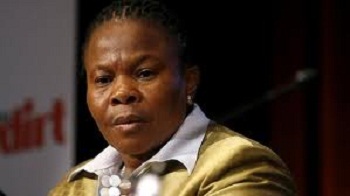
He went on to say that the idea expressed by Minister Susan Shabangu, that the industry must “like it or not”, will yield one clear loser: South Africa. “Free carries in production, including then pre-existent and massive development costs and exploration outlays, at an onerous 20%, would be akin to the pre-emptive confiscation of risk capital and assets. The further potential impost of another 30% equity transfer, to be taken by the state at discretion, on mythical “market-related prices” (that’s about as vague as one can be), merely plonks another nail into the exploration coffin, rendering entry risk/reward costs exorbitant, and would make most operations unviable, even without the ludicrous idea that government would “deploy” two cadre-directors to sit in on corporate boards and hence participate in confidential strategy meetings.”
Continuing on Clarke said that along with mandatory local empowerment equity obligations and a raft of unspecified regulatory controls, “this latest initiative has all the hallmarks of central etatist casting, delusionary and largely unfathomable political motivation, including the worst features of short-term resource nationalism, and it will be doomed from the outset. Neither the country nor its state-owned company, PetroSA, has adequate financial resources or the critical technical wherewithal, to manage the detritus of what will remain. Hence the “law” once promulgated will become a recipe for continued under-performance, and could even leave South Africa as a pariah state within the competitive world and African oil game.”
In the end Clarke believes that few will want to touch its resource-base of undiscovered and undeveloped opportunities in oil and gas. “Others will be the direct beneficiaries Pretoria’s calculations – by way of reallocated capital, risk funds, management focus and exploration effort – such as Namibia, Madagascar and elsewhere, even say Mongolia, given that exploration capital can be reassigned worldwide at the flick of a switch. The demise of the independent licensing agency Petroleum Agency South Africa, implied as well, more in the manner of an execution, will likewise be seen as highly regressive, and lead to the breakdown of corporate and investment relationships that have taken years of hard work and dedication to nurture.”
In closing Clarke told Petroleum Africa, “If there was a template of how not to do oil in Africa, South Africa would now manifest the model, and win the ‘prize’: hands down.”
It should be noted that the bill must still be signed into law by President Jacob Zuma before it becomes effective.
 " alt="First LNG Realized at the Greater Tortue Ahmeyim Project">
 " alt="United Energy Acquires Western Desert Producer APEX">
 " alt="Baker Hughes Announces Major Gas Technology Orders for Venture Global LNG">
 " alt="ReconAfrica: Naingopo Results Demonstrate a Working Petroleum System">
 " alt="Tullow Highlights 2025 Operational Plans in Ghana">
 " alt="TotalEnergies to Supply 1.5 TWh to STMicroelectronics in France Over 15 years">
 " alt="Rockhopper Reaches Final Settlement with United on Egypt’s Abu Sennan Concession">
 " alt="Oil & Gas Crucial for African Growth: AEC Calls for Industry Support to Defend African Market">